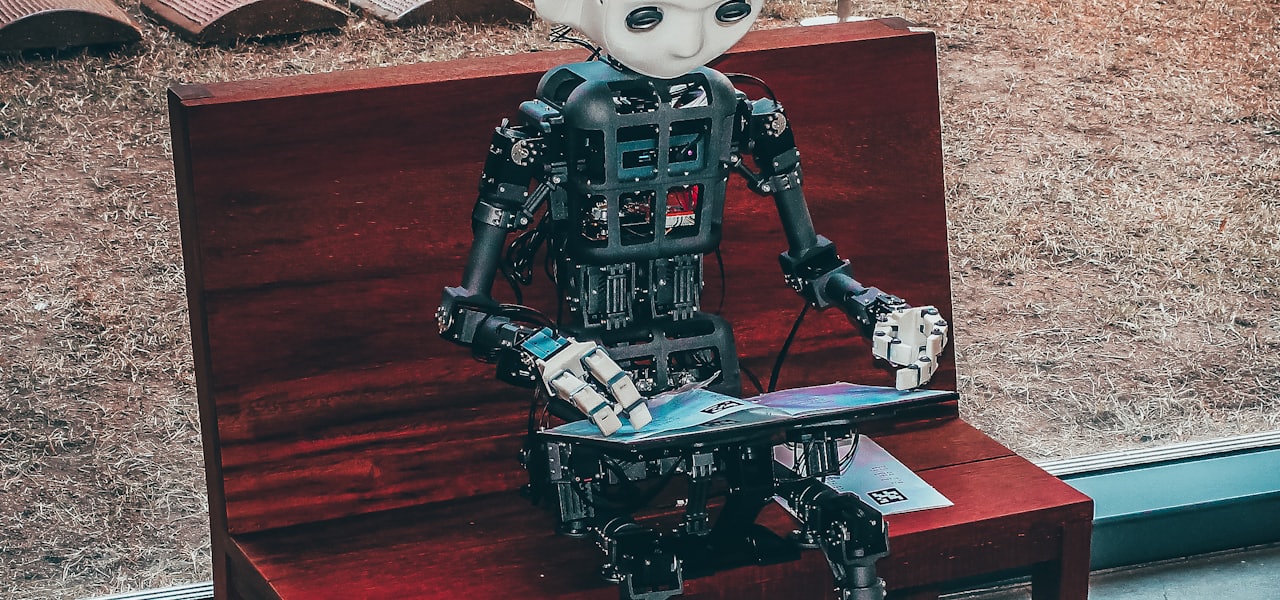
Semantic neural network (SNN) is based on John von Neumann's neural network [von Neumann, 1966] and Nikolai Amosov M-Network. There are limitations to a link topology for the von Neumann’s network but SNN accept a case without these limitations. Only logical values can be processed, but SNN accept that fuzzy values can be processed too. All neurons into the von Neumann network are synchronized by tacts. For further use of self-synchronizing circuit technique SNN accepts neurons can be self-running or synchronized. In contrast to the von Neumann network there are no limitations for topology of neurons for semantic networks. It leads to the impossibility of relative addressing of neurons as it was done by von Neumann. In this case an absolute readdressing should be used. Every neuron should have a unique identifier that would provide a direct access to another neuron. Of course, neurons interacting by axons-dendrites should have each other's identifiers. An absolute readdressing can be modulated by using neuron specificity as it was realized for biological neural networks. There’s no description for self-reflectiveness and self-modification abilities into the initial description of semantic networks [Dudar Z.V., Shuklin D.E., 2000]. But in [Shuklin D.E. 2004] a conclusion had been drawn about the necessity of introspection and self-modification abilities in the system. For maintenance of these abilities a concept of pointer to neuron is provided. Pointers represent virtual connections between neurons. In this model, bodies and signals transferring through the neurons connections represent a physical body, and virtual connections between neurons are representing an astral body. It is proposed to create models of artificial neuron networks on the basis of virtual machine supporting the opportunity for paranormal effects. SNN is generally used for natural language processing. == Related models == Computational creativity Semantic hashing Semantic Pointer Architecture Sparse distributed memory
Sanad (government app)
Sanad (Arabic: سند) is the official digital identity and e-government services application of the Hashemite Kingdom of Jordan. Developed and managed by the Ministry of Digital Economy and Entrepreneurship, the app provides a unified platform for accessing a range of public services and personal records digitally. == Overview == Launched in February 2020, Sanad is part of Jordan's broader digital transformation strategy aimed at improving public service delivery and enhancing administrative efficiency. The app allows users to authenticate their identity digitally and access over 550 services from more than 50 government and private sector entities. == Features == Sanad provides a wide array of services, including: Viewing and managing official digital documents Applying for government services (e.g., jordanian passport issuance or renewal, health insurance) Accessing personal records (e.g., pension, property ownership) Digitally signing documents Paying utility bills and traffic fines Receiving and tracking official notifications The app is available on iOS, Android, and HarmonyOS platforms and supports both Arabic and English languages. == Digital Identity == A core feature of Sanad is the digital identity system, which enables secure login and authentication for all integrated services. Users must activate their digital identity at designated Sanad stations across Jordan to access the full suite of services. == Adoption and Impact == As of 2025, more than 1.6 million Jordanians have activated their digital identities through Sanad. The app has played a significant role in streamlining government interactions and reducing the need for in-person visits, especially during the COVID-19 pandemic. == Recent Developments == In 2025, the Ministry launched an updated version of the app with enhanced user experience and new services, including the e-passport issuance feature.
Gene expression programming
Gene expression programming (GEP) in computer programming is an evolutionary algorithm that creates computer programs or models. These computer programs are complex tree structures that learn and adapt by changing their sizes, shapes, and composition, much like a living organism. And like living organisms, the computer programs of GEP are also encoded in simple linear chromosomes of fixed length. Thus, GEP is a genotype–phenotype system, benefiting from a simple genome to keep and transmit the genetic information and a complex phenotype to explore the environment and adapt to it. == Background == Evolutionary algorithms use populations of individuals, select individuals according to fitness, and introduce genetic variation using one or more genetic operators. Their use in artificial computational systems dates back to the 1950s where they were used to solve optimization problems (e.g. Box 1957 and Friedman 1959). But it was with the introduction of evolution strategies by Rechenberg in 1965 that evolutionary algorithms gained popularity. A good overview text on evolutionary algorithms is the book "An Introduction to Genetic Algorithms" by Mitchell (1996). Gene expression programming belongs to the family of evolutionary algorithms and is closely related to genetic algorithms and genetic programming. From genetic algorithms it inherited the linear chromosomes of fixed length; and from genetic programming it inherited the expressive parse trees of varied sizes and shapes. In gene expression programming the linear chromosomes work as the genotype and the parse trees as the phenotype, creating a genotype/phenotype system. This genotype/phenotype system is multigenic, thus encoding multiple parse trees in each chromosome. This means that the computer programs created by GEP are composed of multiple parse trees. Because these parse trees are the result of gene expression, in GEP they are called expression trees. Masood Nekoei, et al. utilized this expression programming style in ABC optimization to conduct ABCEP as a method that outperformed other evolutionary algorithms.ABCEP == Encoding: the genotype == The genome of gene expression programming consists of a linear, symbolic string or chromosome of fixed length composed of one or more genes of equal size. These genes, despite their fixed length, code for expression trees of different sizes and shapes. An example of a chromosome with two genes, each of size 9, is the string (position zero indicates the start of each gene): 012345678012345678 L+a-baccdcLabacd where “L” represents the natural logarithm function and “a”, “b”, “c”, and “d” represent the variables and constants used in a problem. == Expression trees: the phenotype == As shown above, the genes of gene expression programming have all the same size. However, these fixed length strings code for expression trees of different sizes. This means that the size of the coding regions varies from gene to gene, allowing for adaptation and evolution to occur smoothly. For example, the mathematical expression: ( a − b ) ( c + d ) {\displaystyle {\sqrt {(a-b)(c+d)}}\,} can also be represented as an expression tree: where "Q” represents the square root function. This kind of expression tree consists of the phenotypic expression of GEP genes, whereas the genes are linear strings encoding these complex structures. For this particular example, the linear string corresponds to: 01234567 Q-+abcd which is the straightforward reading of the expression tree from top to bottom and from left to right. These linear strings are called k-expressions (from Karva notation). Going from k-expressions to expression trees is also very simple. For example, the following k-expression: 01234567890 Qb+baQba is composed of two different terminals (the variables “a” and “b”), two different functions of two arguments (“” and “+”), and a function of one argument (“Q”). Its expression gives: == K-expressions and genes == The k-expressions of gene expression programming correspond to the region of genes that gets expressed. This means that there might be sequences in the genes that are not expressed, which is indeed true for most genes. The reason for these noncoding regions is to provide a buffer of terminals so that all k-expressions encoded in GEP genes correspond always to valid programs or expressions. The genes of gene expression programming are therefore composed of two different domains – a head and a tail – each with different properties and functions. The head is used mainly to encode the functions and variables chosen to solve the problem at hand, whereas the tail, while also used to encode the variables, provides essentially a reservoir of terminals to ensure that all programs are error-free. For GEP genes the length of the tail is given by the formula: t = h ( n max − 1 ) + 1 {\displaystyle t=h(n_{\max }-1)+1} where h is the head's length and nmax is maximum arity. For example, for a gene created using the set of functions F = {Q, +, −, ∗, /} and the set of terminals T = {a, b}, nmax = 2. And if we choose a head length of 15, then t = 15 (2–1) + 1 = 16, which gives a gene length g of 15 + 16 = 31. The randomly generated string below is an example of one such gene: 0123456789012345678901234567890 b+a-aQab+//+b+babbabbbababbaaa It encodes the expression tree: which, in this case, only uses 8 of the 31 elements that constitute the gene. It's not hard to see that, despite their fixed length, each gene has the potential to code for expression trees of different sizes and shapes, with the simplest composed of only one node (when the first element of a gene is a terminal) and the largest composed of as many nodes as there are elements in the gene (when all the elements in the head are functions with maximum arity). It's also not hard to see that it is trivial to implement all kinds of genetic modification (mutation, inversion, insertion, recombination, and so on) with the guarantee that all resulting offspring encode correct, error-free programs. == Multigenic chromosomes == The chromosomes of gene expression programming are usually composed of more than one gene of equal length. Each gene codes for a sub-expression tree (sub-ET) or sub-program. Then the sub-ETs can interact with one another in different ways, forming a more complex program. The figure shows an example of a program composed of three sub-ETs. In the final program the sub-ETs could be linked by addition or some other function, as there are no restrictions to the kind of linking function one might choose. Some examples of more complex linkers include taking the average, the median, the midrange, thresholding their sum to make a binomial classification, applying the sigmoid function to compute a probability, and so on. These linking functions are usually chosen a priori for each problem, but they can also be evolved elegantly and efficiently by the cellular system of gene expression programming. == Cells and code reuse == In gene expression programming, homeotic genes control the interactions of the different sub-ETs or modules of the main program. The expression of such genes results in different main programs or cells, that is, they determine which genes are expressed in each cell and how the sub-ETs of each cell interact with one another. In other words, homeotic genes determine which sub-ETs are called upon and how often in which main program or cell and what kind of connections they establish with one another. === Homeotic genes and the cellular system === Homeotic genes have exactly the same kind of structural organization as normal genes and they are built using an identical process. They also contain a head domain and a tail domain, with the difference that the heads contain now linking functions and a special kind of terminals – genic terminals – that represent the normal genes. The expression of the normal genes results as usual in different sub-ETs, which in the cellular system are called ADFs (automatically defined functions). As for the tails, they contain only genic terminals, that is, derived features generated on the fly by the algorithm. For example, the chromosome in the figure has three normal genes and one homeotic gene and encodes a main program that invokes three different functions a total of four times, linking them in a particular way. From this example it is clear that the cellular system not only allows the unconstrained evolution of linking functions but also code reuse. And it shouldn't be hard to implement recursion in this system. === Multiple main programs and multicellular systems === Multicellular systems are composed of more than one homeotic gene. Each homeotic gene in this system puts together a different combination of sub-expression trees or ADFs, creating multiple cells or main programs. For example, the program shown in the figure was created using a cellular system with two cells and three normal genes. The applications of these multicellular systems are mu
The MANIAC
The MANIAC is a 2023 novel by Chilean author Benjamín Labatut, written in English. It is a fictionalised biography of polymath John von Neumann, whom Labatut calls "the smartest human being of the 20th century". The book focuses on von Neumann, but is also about physicist Paul Ehrenfest, the history of artificial intelligence, and Lee Sedol's Go match against AlphaGo. The book received mostly positive reviews from critics. == Background == John von Neumann was a Jewish Hungarian-born polymath who was a prodigy from an early childhood. Von Neumann worked in multiple fields of science, theoretical (mathematical foundations of quantum mechanics, game theory, cellular automata) and applied (nuclear weapons research during the Manhattan Project in World War II, computer architecture later named after him, and many other subjects). Labatut calls him "the smartest human being of the 20th century". The title of the book is derived from an early computer based on von Neumann architecture, built after the war at Los Alamos laboratory, called MANIAC I. Benjamín Labatut is a Chilean author known for his 2020 book When We Cease to Understand the World, a collection of fictionalised stories about famous scientists that received positive reviews and was translated into multiple languages from Spanish. The MANIAC is Labatut's first book written in English. In an interview, Labatut said he prefers to write in English: English is my preferred form of thought. ... English is the language I do most if not all my reading it. And it is a far better language than Spanish, in so many ways. Writing "clean" prose in Spanish is almost impossible, because so many of its sounds clash. Borges said that he found English "a far finer language than Spanish" because it's both Germanic and Latin; because of its wonderful vocabulary ("Regal is not exactly the same thing as saying kingly," he explained); because of its physicality; and because you can do almost anything with verbs and prepositions. Labatut was inspired to write The MANIAC by George Dyson's book Turing's Cathedral. == Synopsis == The book has three chapters. The first chapter, "Paul or the Discovery of the Irrational", written in the third person, is about physicist Paul Ehrenfest. The chapter opens with Ehrenfest shooting dead his son Vassily, who suffered from Down syndrome, and then himself. It then recounts Ehrenfest's life story, describing his relationships with his wife Tatyana, his mistress Nelly Meyjes, and his eminent physicist colleagues. It chronicles his descent into despair and depression over his marriage's disintegration, the advent of quantum mechanics, and the direction Europe was heading in with the Nazi Party's rise to power in Germany, looping back to the initial scene of the chapter. The second chapter, "John or the Mad Dreams of Reason", is about John von Neumann, and is written as a series of interviews of his family members, wives, friends, and colleagues, each in a distinctive voice. It is divided into three parts. Part I, "The Limits of Logic", is about his early life, as told by von Neumann's childhood friend Eugene Wigner, mother Margrit Kann, brother Nicholas von Neumann, first wife Mariette Kövesi, and scientists Theodore von Karman, George Polya, and Gábor Szegő. It climaxes with von Neumann's participation in David Hilbert's program to create a logical basis for mathematics based on a consistent set of axioms, a quest ultimately scuppered by Kurt Gödel. Part II, "The Delicate Balance of Terror", discusses von Neumann's role in the Manhattan Project (as told by Richard Feynman); his development of game theory and the doctrine of mutual assured destruction (MAD) (as told by Oskar Morgenstern); and his creation of the MANIAC I computer and the von Neumann architecture (as told by Julian Bigelow). In Part III, "Ghosts in the Machine", Sydney Brenner discusses von Neumann's contributions to biology, his theoretical work on self-replicating and self-repairing machines, and his vision of Von Neumann probes exploring the universe. Nils Aall Barricelli talks about his ideas of digital life and his disagreements with von Neumann. Von Neumann's wife Klára Dán, daughter Marina, and Wigner talk about his final years, personal life, and death. The third chapter, "Lee or The Delusions of Artificial Intelligence", is about Lee Sedol's Go match against AlphaGo. The narrative reverts to the third person. The chapter also tells the story of Demis Hassabis, a chess prodigy in childhood who decided to work on artificial intelligence and founded DeepMind, the company behind AlphaGo. The way is pointed to the future, as artificial intelligence's growing capabilities outpace the human mind. The book ends with Lee Sedol's retirement from Go, and new version of DeepMind's program, AlphaZero, that did not train on human games but nevertheless became the strongest player in Go, chess, and Shogi. == Reception == The book received mostly positive reviews. In his review for The New York Times Tom McCarthy noted the ambiguity of genre: "At its best, as in the stunning opening sequence reconstructing the murder-suicide of the physicist Paul Ehrenfest and his disabled son, or in the final section's gripping account of a computer defeating the world's best human Go player, you just throw up your hands and think, Who cares what discourse label we assign this stuff? It's great." Becca Rothfeld of the Washington Post praised the book, writing that it is "Labatut's latest virtuosic effort, at once a historical novel and a philosophical foray": "The MANIAC is a work of dark, eerie and singular beauty." She noted that the book "can also be difficult to read" because of its unusual narrative structure: "The book is narrated by a cluttered polyphony of characters, among them both of von Neumann's wives and a number of his teachers and colleagues. ... Like von Neumann, The MANIAC strives to adopt the impartial standpoint of the universe." Killian Fox of The Guardian sees the book as "darkly fascinating novel", and notes Labatut's "impressive dexterity, unpicking complex ideas in long, elegant sentences that propel us forward at speed (this is his first book written in English). Even in the more feverish passages, when yet another great mind succumbs to madness, haunted by the spectres they've helped unleash on the world, he feels in full control of his material." Sam Byers of The Guardian praises the book and the author's style: "The opening chapter of Benjamín Labatut's second novel is such a perfect distillation of his technique that it could serve as a manifesto." and "Readers ... will recognise the sense of breathlessness his best writing can evoke. Seemingly loosened from the laws of physics they describe, his sentences range freely through time and space, connecting not only characters and events, but the delicate tissue of intellectual history, often with a lightness of touch that belies their underlying complexity." He writes on the narrative structure: "Through a cascade of staccato chapters, an ensemble of narrators offer their piecemeal insights." Byers adds that "a brilliant novel is not quite what we end up with" and sees the problem in the "diffusion": "Labatut simply spreads himself too thin. Too many years in too few pages; too many voices with far too little to distinguish them. Initially intriguing, the bite-size monologues quickly come to feel inadequate." Some reviewers did not see the book as a biography. In an essay for the Cleveland Review of Books, Ben Cosman juxtaposes the book with Christopher Nolan's biopic Oppenheimer, and writes that it "follows the development of artificial intelligence—first as an idea at the beginning of the twentieth century, and then as a practicality at the beginning of the twenty-first—through the lives of three men who faced it." He also compared the book's structure to "witness testimony". Another reviewer called the book "perfect for anyone thirsting for more nuclear anxiety after watching Oppenheimer". Garrett Biggs of the Chicago Review of Books writes of the book's style: "Labatut writes about scientists the way Roberto Bolaño writes about poets. They are near mythical figures, captured at the corner of the novel's eye. They become historical in the most fraught sense of the term: subject to rumor and speculation and, eventually, the novel's form inflates their personas into something so large they can only be understood as narrative, never known in any objective capacity." Biggs criticises the last chapter: "the story of artificial intelligence has yet to be written. And so when Labatut's narration editorializes about artificial intelligence as 'a future that inspires hope and horror,' The MANIAC disassembles as a novel and starts to sound like a stale thinkpiece. AlphaGo might represent the first glimmer of a true artificial intelligence, as Labatut suggests. It also could one day be considered nothing more than a souped-up cousin to IBM's DeepBlue.
Transdermal optical imaging
Transdermal optical imaging, also known as transdermal optical imagery or TOI, is a method of detecting blood flow of the face by measuring hemoglobin concentration using a digital video camera. Because of the translucent property of skin, light can travel beneath the skin and re-emit. The re-emitted light from underneath the skin is affected by chromophores, mainly hemoglobin and melanin, which differ in color. The color difference allows TOI machine learning software to separate the images into layers, which are known as bitplanes. It extracts signals rich in hemoglobin and signals rich in melanin, then discards the melanin-rich signals to obtain a recording of hemoglobin changes under the skin. Transdermal optical imaging has been proposed as an alternative to cuff-based methods of measuring blood pressure because it is able to measure heart rate accurately in a "contactless and non-invasive" way. Transdermal optical imaging may be able to detect hidden emotions using the patterns of blood flow in the face.
Groover
Groover is an online platform, record label and distributor, connecting artists and musicians with music professionals and media outlets. The service was founded in 2018 in France and operates from offices in Paris and New York. The platform has over 3,000 active contacts, including SPIN Magazine and Sofar Sounds. Groover uses a micro-payment model. Among the platform's over 500,000 regular users are record labels such as Ninja Tune, Ba Da Bing Records, Dance To The Radio, Roche Musique, Wagram Music, Secret City Records, and artists including Bonobo, Michael Bolton, Aloe Blacc, Haddaway, Passenger, La Femme and Chinese Man. == History == Groover was launched at the MaMA Music Convention in October 2018. It was co-founded by Dorian Perron, Romain Palmieri, and Rafaël Cohen while they were students at UC Berkeley. Initially growing in France, the company has expanded to the United States, Canada, the United Kingdom, Brazil, Italy, and elsewhere in Europe. In March 2019, Groover was part of the Business France delegation at the South by Southwest (SXSW) festival. In June 2019, Groover raised €1.3 million from various angel investors. In April 2021, Groover acquired the platform Soonvibes, which had 70,000 users at the time, in order to strengthen its community in the electronic music space. In November 2021, Groover announced a €6 million funding round from Bpifrance Creative Industries and Partech. Between 2023 and 2025, Groover entered strategic partnerships with major artist service providers, including CD Baby, TuneCore, SoundCloud, UnitedMasters, Symphonic Distribution, Audiomack and SACEM. In February 2024, Groover announced a Series A funding round of $8 million from OneRagTime, Trind, Techmind, and Mozza Angels. == Function == Using a micro-payment system, professionals listen to tracks and provide written feedback. These professionals retain full editorial independence and are under no obligation to share the track or contact the artist. == Awards == 2nd Prize for Music Innovation 2023 from the Centre national de la musique (France) "Future Creator" Award at the Petit Poucet Competition 2019 Jury's Special Mention at the MaMA Invent 2019 competition 1st Prize for Digital Initiative in Culture, Communication & Media 2019 awarded by Audiens "Start-up of the Year" at the Social Music Awards 2020 French American Entrepreneurship Award 2022 at the French Consulate in New York
Death of Elaine Herzberg
The death of Elaine Herzberg (August 2, 1968 – March 18, 2018) was the first recorded case of a pedestrian fatality involving a self-driving car, after a collision that occurred late in the evening of March 18, 2018. Herzberg was pushing a bicycle across a four-lane road in Tempe, Arizona, United States, when she was struck by an Uber test vehicle, which was operating in self-drive mode with a human safety backup driver sitting in the driving seat. Herzberg was taken to the local hospital where she died of her injuries. Following the fatal incident, the National Transportation Safety Board (NTSB) issued a series of recommendations and sharply criticized Uber. The company suspended testing of self-driving vehicles in Arizona, where such testing had been approved since August 2016. Uber chose not to renew its permit for testing self-driving vehicles in California when it expired at the end of March 2018. Uber resumed testing in December 2018, starting in Pittsburgh, Pennsylvania. In March 2019, Arizona prosecutors ruled that Uber was not criminally responsible for the crash. The back-up driver of the vehicle was charged with negligent homicide, pled guilty to endangerment, and was sentenced to three years' probation. While Herzberg was the first pedestrian killed by a self-driving car, driver Gao Yaning died in a Tesla semi-autonomous car two years earlier. A reporter for The Washington Post compared Herzberg's fate with that of Bridget Driscoll who, in the United Kingdom in 1896, was the first pedestrian to be killed by an automobile. The Arizona incident has magnified the importance of collision avoidance systems for self-driving vehicles. == Collision summary == Herzberg was crossing Mill Avenue (North) from west to east, approximately 360 feet (110 m) south of the intersection with Curry Road, outside the designated pedestrian crosswalk, close to the Red Mountain Freeway. She was pushing a bicycle laden with shopping bags, and had crossed at least two lanes of traffic when she was struck at approximately 9:58 pm MST (UTC−07:00) by a prototype Uber self-driving car based on a Volvo XC90, which was traveling north on Mill. The vehicle had been operating in autonomous mode since 9:39 pm, nineteen minutes before it struck and killed Herzberg. The car's human safety backup driver, Rafaela Vasquez, did not intervene in time to prevent the collision. Vehicle telemetry obtained after the crash showed that the human operator responded by moving the steering wheel less than a second before impact, and she engaged the brakes less than a second after impact. == Cause investigation == The county district attorney's office recused itself from the investigation, due to a prior joint partnership with Uber promoting their services as an alternative to driving under the influence of alcohol. Accounts differ on the speed limit at the place of the incident. According to Tempe police the car was traveling in a 35 mph (56 km/h) zone, but this is contradicted by a posted speed limit of 45 mph (72 km/h). The National Transportation Safety Board (NTSB) sent a team of federal investigators to gather data from vehicle instruments, and to examine vehicle condition along with the actions taken by the safety driver. Their preliminary findings were substantiated by multiple event data recorders and proved the vehicle was traveling 43 miles per hour (69 km/h) when Herzberg was first detected 6 seconds (378 feet (115 m)) before impact; during 4.7 seconds the self driving system did not infer that emergency braking was needed. A vehicle traveling 43 mph (69 km/h) can generally stop within 89 feet (27 m) once the brakes are applied. The machine needed to be 1.3 seconds (82 feet (25 m)) away prior to discerning that emergency braking was required, whereas at least that much distance was required to stop. The system failed to behave properly. A total stopping distance of 76 feet itself would imply a safe speed under 25 mph (40 km/h). Human intervention was still legally required. Computer perception–reaction time would have been a speed limiting factor had the technology been superior to humans in ambiguous situations; however, the nascent computerized braking technology was disabled the day of the crash, and the machine's apparent 4.7-second perception–reaction (alarm) time allowed the car to travel 250 feet (76 m). Video released by the police on March 21 showed the safety driver was not watching the road moments before the vehicle struck Herzberg. === Environment === In widely disseminated remarks that would shape the narrative about the crash, which were later seen as prejudicial and subsequently contradicted by her own department, Tempe Police Chief Sylvia Moir was quoted stating that the collision was "unavoidable" based on the initial police investigation, which included a review of the video captured by an onboard camera. Moir faulted Herzberg for crossing the road in an unsafe manner: "It is dangerous to cross roadways in the evening hour when well-illuminated, managed crosswalks are available." According to Uber, safety drivers were trained to keep their hands very close to the wheel all the time while driving the vehicle so they were ready to quickly take control if necessary. The driver said it was like a flash, the person walked out in front of them. His [sic] first alert to the collision was the sound of the collision. [...] it's very clear it would have been difficult to avoid this collision in any kind of mode (autonomous or human-driven) based on how she came from the shadows right into the roadway. Tempe police released video on March 21, 2018, showing footage recorded by two onboard cameras: one forward-looking, and one capturing the safety driver's actions. The forward-facing video shows that the self-driving car was traveling in the far right lane when it struck Herzberg. The driver-facing video shows the safety driver was looking down prior to the collision. The Uber operator is responsible for intervening and taking manual control when necessary as well as for monitoring diagnostic messages, which are displayed on a screen in the center console. In an interview conducted after the crash with NTSB, the driver stated she was monitoring the center stack at the time of the collision. After the Uber video was released, journalist Carolyn Said noted the police explanation of Herzberg's path meant she had already crossed two lanes of traffic before she was struck by the autonomous vehicle. The Marquee Theatre and Tempe Town Lake are west of Mill Avenue, and pedestrians commonly cross mid-street without detouring north to the crosswalk at Curry. According to reporting by the Phoenix New Times, Mill Avenue contains what appears to be a brick-paved path in the median between the northbound and southbound lanes; however, posted signs prohibit pedestrians from crossing in that location. When the second of the Mill Avenue bridges over the town lake was added in 1994 for northbound traffic, the X-shaped crossover in the median was installed to accommodate the potential closing of one of the two road bridges. The purpose of this brick-paved structure is purely to divert cars from one side to the other if a bridge is closed to traffic, and although it may look like a crosswalk for pedestrians, it is in fact a temporary roadway with vertical curbs and warning signs. === Software issues === Michael Ramsey, a self-driving car expert with Gartner, characterized the video as showing "a complete failure of the system to recognize an obviously seen person who is visible for quite some distance in the frame. Uber has some serious explaining to do about why this person wasn't seen and why the system didn't engage." The NTSB preliminary report, however, noted that the software did order the car to brake 1.3 seconds before the collision. A video shot from the vehicle's dashboard camera showed the safety driver looking down, away from the road. It also appeared that the driver's hands were not hovering above the steering wheel, which is what drivers are instructed to do so they can quickly retake control of the car. Uber had moved from two employees in every car to one. The paired employees had been splitting duties: one ready to take over if the autonomous system failed, and another to keep an eye on what the computers were detecting. The second person was responsible for keeping track of system performance as well as labeling data on a laptop computer. Mr. Kallman, the Uber spokesman, said the second person was in the car for purely data related tasks, not safety. When Uber moved to a single operator, some employees expressed safety concerns to managers, according to the two people familiar with Uber's operations. They were worried that going solo would make it harder to remain alert during hours of monotonous driving. The recorded telemetry showed the system had detected Herzberg six seconds before the crash, and classified her first as an unknown object, then as a